
A Legacy of Love, A Language of Respect

A ship pulling into the isolated Kalaupapa peninsula from the rough seas around Moloka‘i.
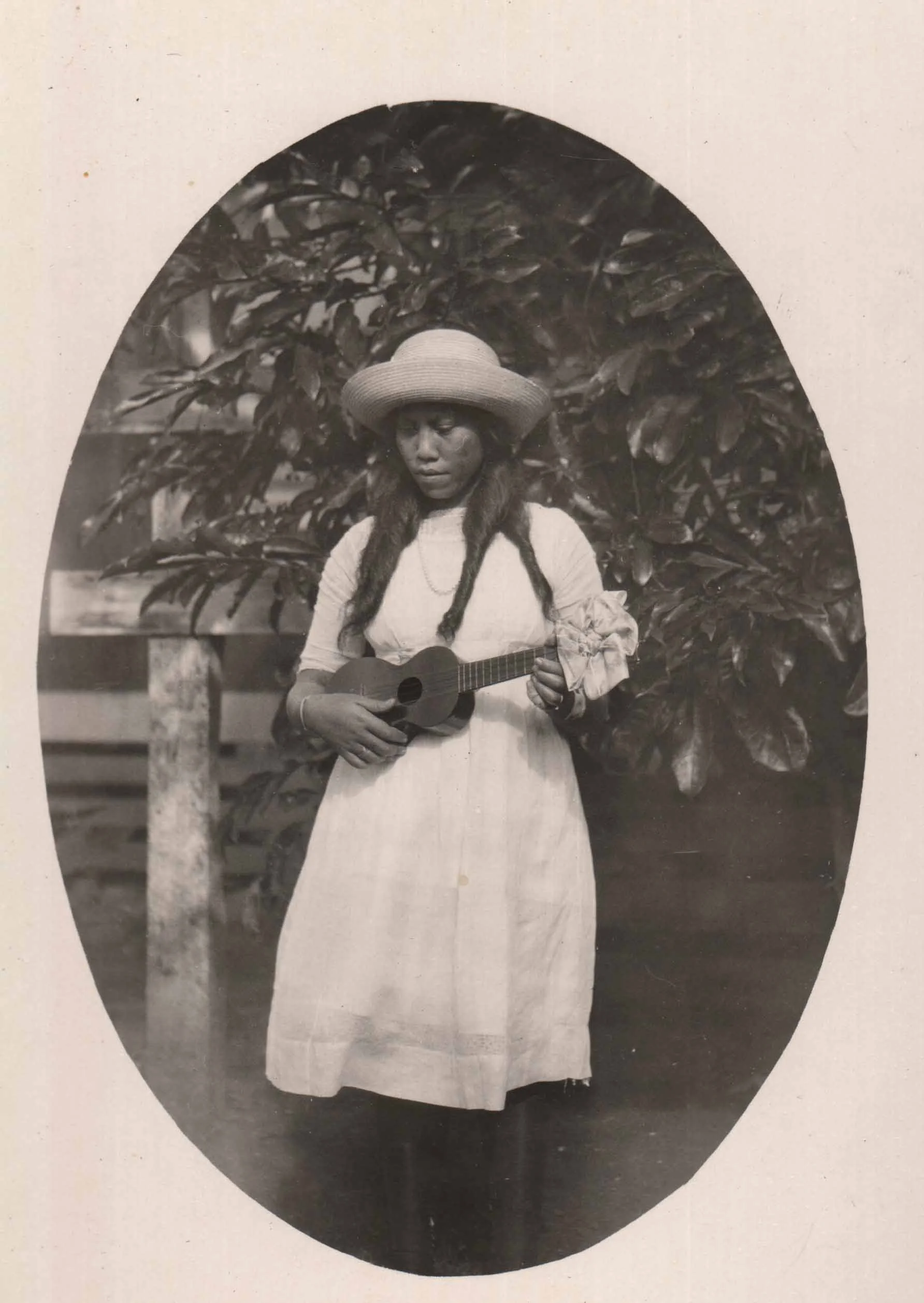
Rose Aalona with her 'ukulele. Rose was sent to Kalaupapa in 1916 at the age of 10.
She lived with Hansen’s disease, under the Sisters’ care at the Bishop Home, until age 23.
Together, let us continue to build a world where every person is seen with compassion.
Words matter—why we no longer say or use the word “leper.”
As we prepare to republish Pilgrimage and Exile: Mother Marianne of Molokai, a collective decision has been made not to use the derogatory term "leper." While this term is historically used, it is now widely recognized as stigmatizing and dehumanizing.
The history recounted in this book took place more than 100 years ago when the word did not have the same hurtful overtones that it has in modern times. For many, the word evokes images of isolation, fear, and exclusion. It is a reminder of the painful legacy of the social stigma that surrounded Hansen’s disease for centuries.
In its place, we use respectful alternatives such as “people with Hansen’s disease.” This updated version of "Pilgrimage and Exile" follows current modern-day international guidelines regarding language associated with this disease.
Words shape our perspectives. They influence how people are treated and how history is remembered. They have meanings that change over time, and adapting to change is a core value of the Sisters of St. Francis. “Pilgrimage and Exile” is not just a historical account. It’s a living witness to the courage and faith of the people of Kalaupapa, and to Saint Marianne’s love.
Saint Marianne dedicated her life to caring for those exiled and misunderstood. She served through love, seeing not just a disease, but whole people deserving of empathy.
Today, we honor her legacy by choosing words that uplift and respect the people she so lovingly served. We believe each person is an individual first, above and beyond all labels, and is deserving of dignity and respect.
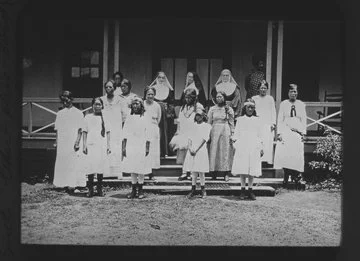
Sisters and patients standing outside the Bishop Home.